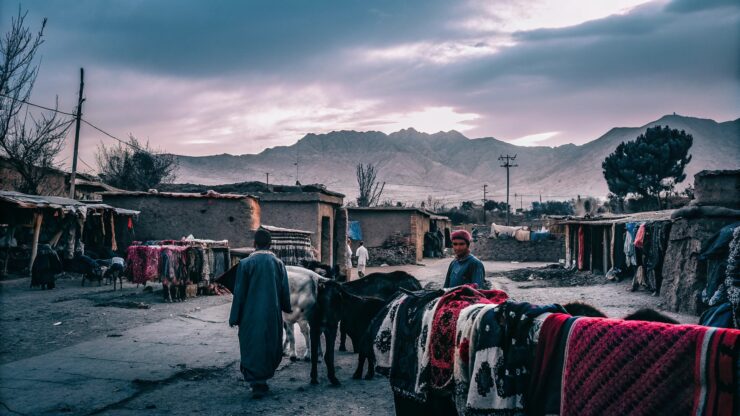
Afghanistan is a landlocked country in South-Central Asia, bordered by Pakistan, Iran, Turkmenistan, Uzbekistan, Tajikistan, and a small border with China. Its stunning mountain ranges, deep cultural roots, and rich history make it one of the most fascinating countries in the region. For thousands of years, Afghanistan has served as a vital crossroads of civilizations, connecting East and West.
🌍 Geography and Landscape of Afghanistan
The Hindu Kush mountains dominate Afghanistan’s rugged terrain, effectively splitting the country into distinct regions. In the north, fertile plains support agriculture, while in contrast, the south and west consist of arid deserts and dry plateaus. The capital city, Kabul, lies at about 1,800 meters above sea level, surrounded by steep mountains that define its dramatic landscape.
Furthermore, Afghanistan experiences four distinct seasons. In winter, central and northern areas face snow and cold temperatures. Meanwhile, the southern regions experience hot, dry summers, often reaching extreme temperatures.
🕌 Afghan Culture and People
Afghanistan’s population exceeds 40 million and includes diverse ethnic groups such as Pashtuns, Tajiks, Hazaras, Uzbeks, and Turkmen. People speak multiple languages; notably, Dari (Persian) and Pashto serve as the two official ones.
Afghans take immense pride in their hospitality, music, poetry, and storytelling. In particular, colorful traditional clothing, handwoven carpets, and flavorful dishes like Kabuli Pulao express the country’s vibrant identity. Additionally, strong family values and tight-knit communities remain essential aspects of daily life.
📜 A Glimpse Into Afghan History
Afghanistan’s rich history stretches back to ancient times. Historically, it played a key role along the Silk Road, which facilitated trade and cultural exchange between Asia, the Middle East, and Europe. Consequently, many powerful empires such as the Achaemenids, Mauryans, Kushans, and Islamic Caliphates left a lasting legacy.
Later, in the 19th and 20th centuries, foreign powers like Britain and Russia vied for influence in what became known as the Great Game. Eventually, Afghanistan gained full independence in 1919. However, internal conflict soon followed.
The Soviet invasion in 1979 sparked a brutal decade-long war. After their withdrawal, civil war erupted and led to the rise of the Taliban in the 1990s. Following 9/11, the United States and its allies intervened in 2001, sparking a 20-year conflict. By 2021, the Taliban returned to power, prompting concerns about women’s rights and minority freedoms.
🧭 Travel to Afghanistan: Beauty and Challenges
Despite political instability, Afghanistan offers breathtaking natural and historical wonders. For example, the Bamiyan Valley and the Minaret of Jam highlight the country’s architectural and spiritual past. While tourism remains limited, researchers and cultural preservationists continue to study these unique sites.
Currently, Afghanistan struggles with economic hardship, international isolation, and humanitarian crises. Nevertheless, its people continue to show remarkable resilience and hope. Many Afghans, both inside and outside the country, work hard to preserve their culture and strive for a brighter future.